Thursday, January 27, 2022

Hawaiian Music

 Music of Hawaii

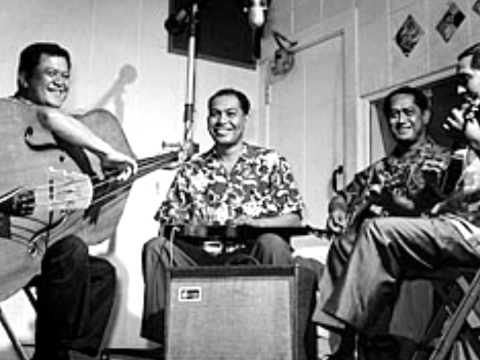
Did you know that the Hawaiian language doesn’t actually have a word for music? Despite this fact, the music culture in Hawaii is very rich! Similarly to the cultures of Native Americas and Middle East, chanting or mele is a big part of Hawaiian culture. Even though the Hawaiian language doesn’t have a word for music, mele acts as the foundation for all Hawaiian music. Mele was often done alongside hula dancing as a form of expression, to praise the Gods, and as a form of storytelling. The Hawaiian people would also play lots of instruments to accompany the song, dance and mele. In the 1700s Europeans came to Hawaii and brought their music with them. When the Europeans came, they exposed the Hawaiians to Christian hymns. Shortly after the Europeans came and brought guitars and cavaquinhos which eventually the Hawaiians adapted into the beloved ukulele.


Another way that the guitar/cavaquinhos was adapted was by loosening the strings of the guitar. Loosening the strings of the guitar gave the instrument a distinct sound and made finger-picking easier. This way of playing guitar became known as “slack-key guitar” and became very popular. (I've attached a video of a Gabby Pahinui song. He's a very popular Hawaiian musician and played slack-key guitar)


Instruments of Hawaii

Now that you have a little bit of background, let's take a look at some Hawaiian instruments!

Ipu


Ipu heke

Ipu drums are made of hollowed out Gourds. Ipu drums can either be single gourd drums (ipu) or double gourd drums (ipu heke). Ipu drums are smaller and more portable which means it’s easier for hula dancers to dance with them. The ipu heke drums are larger but still pretty portable. While I was researching the Ipu drums, I found a video about how the Ipe is made. When picking an Ipu drum, picking your gourd is important because you will be one with your Ipu. In order to make an Ipur drum, you first inspect the gourd and make sure there’s no cracks in it. After that, you wash the gourd and scrub all the dirt off of the exterior. While everyone was cleaning their gourd, the person facilitating the ipu building said that cleaning the gourds was “a good time to connect and bond with your ipu”. Once the gourds were clean, everyone then cut the neck of the gourd and hollowed out the inside to create a hole. After you’ve cut your first gourd, if you’re making an ipu heke then you cut the neck of your second gourd, put it on top, and cut the resonant hole in the top. Now that you have prepared both gourds, you can sand it down to make it smooth then glue them together. Boom! Now you have an Ipu heke! If you want to watch the video I learned this information from, I’ve included it below. I have also attached some videos so that you can see the ipu heke in action. 


Uli' Uli'

Uli' Uli'


Another gourd instrument is the uli' uli'. The uli' uli' is the Hawaiian shaker. The uli' uli 'can be filled with seeds, pebbles, or beads. Typically, the uli' uli' are decorated with feathers.


Ili' Ili'


Ili ili are two river stones that you hold in your hands. One of the river stones is held by your thumb and index finger and the other is held in your hand. When you open and close your hands, a clacking sound is made. 


Pu'ili


Another instrument that is commonly used in hula dance is pu'ili. The pu'ili is made out of bamboo sticks and is typically played by hitting the instrument on the body. Check out the video below to see how the pu'ili is played!

Hawaiian Dance

Now that you know a little bit about the history of Hawaiian music and about some of their instruments, Let's look at some forms of Hawaiian dance! 


Fire Knife Dancing


When the Polynesians came and settled in Hawaii, they brought a lot of their traditions with them. One of these traditions is fire knife dancing. It’s believed that fire knife dancing was originally used as a way to prepare men for war. The fire knife dances were kind of a way to get their adrenaline going before they left for battle. The knives are wrapped in towels so that they can catch flame and then the dancers perform dance and tricks with the fire knife. Check out this video below and see what you think! The beginning of the video shows how they’re lighting the fire and then they go into the dance.


Hula Dance


Perhaps the most popular form of Hawaiian dance is Hula Dance. Hula dance is a form of storytelling that is accompanied by Hawaiian music or mele. Most of the time, hula is performed by women, but it can be performed by men too. While hula is often performed as a form of entertainment for tourists, hula is actually very sacred and is often performed at religious ceremonies. It isn’t uncommon for hula dancing to be done in church. Another way that hula is used is as a ritual to promote abundance/fertility in Hawaii's land, community, and people. Hula is a very important part of Hawaiian culture because it helps tell their story and preserve their history. Below I have attached two videos. The first video is of the hula dance. The second is a beautiful video by National Geographic about the history of hula. I hope you enjoy them!


Queen Lil'uokalani


For my last section about Hawaiian culture and music, I would like to talk about Queen Lili’uokalani. Lili’uokalani was the last monarch in Hawaii before the United States claimed Hawaii as US territory in July of 1898. While there are a lot of Hawaiian politics I could discuss here, the reason I wanted to talk about Queen Lili’uokalani is because of all the music she wrote


Queen Lili’uokalani had a good education and musical background. Lili'uokalani could play and she was a trained singer and choir director. In the course of her lifetime, Queen Lili’uokalani composed/wrote over 150 mele. One of her first works was a song titled “He Mele Lahui Hawaii” which translates to “Song of The Hawaiian Nation”. I’ve attached the song and an English translation below.


English Translation:

Almighty Father bend thine ear

And listen to a nation's prayer

That lowly bows before thy throne

And seeks thy fostering care

Grant your peace throughout the land

Over these sunny sea girt isles

Keep the nation's life, oh Lord,

And on our sovereign smile


Chorus:

Grant your peace throughout the land

Over these sunny isles

Keep the nations life, oh Lord

And upon our sovereign smile


Guard him with your tender care

Give him length of years to reign

On the throne his father's won

Bless the nation once again

Give the king your loving grace

And with wisdom from on high

Prosperous lead his people on

As beneath your watchful eye

Grant your peace throughout the land


Bless O Lord our country's chiefs

Grant them wisdom so to live

That our people may be saved

And to You the glory give

Watch over us day by day

King and people with your love

For our hope is all in You

Bless us, You who reign above

Grant your peace throughout the land


Believe it or not, you’ve actually probably heard one of Queen Lili’uokalani’s songs! If you’re anything like me, you love the Disney Movie Lilo and Stitch. While there is much more to the Hawaiian culture than is expressed in this movie, there are a few songs in the movie that are known and loved by the Hawaiian people. One of those songs is “Aloha Oe”.


Now that you've had a refresher, let's listen to the whole song!


Conclusion:

I had an absolute blast researching and learning more about Hawaiian culture and music. There are a lot of similarities between Hawaii and all of the other cultures we studied throughout our Diverse Cultures of Music class. Every time I was able to learn about another culture and their music, I was filled with joy. To see people from all walks of life together making music is a beautiful thing. Here's to diversifying our playlists and using music as a way to listen to understand. 

Love and light always, 

-Michaela Faye

Sources

Alexander, K. L. (n.d.). Biography: Queen lili'uokalani. Retrieved January 27, 2022, from https://www.womenshistory.org/education-resources/biographies/queen-liliuokalani

Andy Beal March 30, Beal, A., Andy Beal Andy Beal provides the photos, (Adsbygoogle=Window.adsbygoogle||[]).push({}); Says:, H., says:, L. G. G. T., Says:, F. T., says:, R. S., 29, A. B. says: D., says:, A. B., *, N., & Beal, S. (2019, March 30). The Hawaiian Hula Dance: 10 facts you may not already know. Go Visit Hawaii. Retrieved January 27, 2022, from https://www.govisithawaii.com/2013/05/21/hawaiian-hula-dance/#:~:text=The%20hula%20dance%20is%20one%20of%20Hawaii%E2%80%99s%20oldest,portray%20the%20story%20of%20the%20chant%20or%20song.

Discover Hawaii. (2017, July 7). Hawaiian fire dancers, a spectacle like no other - big island. Discover Hawaii. Retrieved January 27, 2022, from https://www.discover-hawaii.com/big%20island/articles/hawaiian-fire-dancers-a-spectacle-like-no-other_662/

Manual, A. (2020, October 14). Hawaiian music, its origins and evolution. HomeyHawaii. Retrieved January 27, 2022, from https://www.homeyhawaii.com/blog/music/hawaiian-music-origins-and-evolution/

Mele Lāhui Hawaiʻi, Hawaiian National Anthem - Words & music by Queen Liliʻuokalani. Mele Lahui hawaii. (n.d.). Retrieved January 27, 2022, from http://www.huapala.org/Me/Mele_Lahui_Hawaii.html

Milles, K. M. (n.d.). The history of Hawaiian Music. Hawaiian Culture Stories. Retrieved January 27, 2022, from https://www.hawaiian-culture-stories.com/hawaiian-music.html

Riggle, E. (2021, May 26). The songs of Lili'uokalani, queen of hawai'i. All Classical Portland. Retrieved January 27, 2022, from https://www.allclassical.org/the-songs-of-liliuokalani-queen-of-hawaii/

What is hula: Telling the stories of Hawaii. Mana Artisan Botanics. (2021, February 2). Retrieved January 27, 2022, from https://manabotanics.com/hawaiian-culture/hula-stories-of-hawaii/


Tuesday, January 25, 2022

Music & Family

 Introducing: Hope Lineberry 


Like I've mentioned in several of my previous blog posts, my parents have both had a huge impact on my musical life. When I realized I was going to be interviewing a family member about the impact music has had on their life, I became very excited to talk to my mom. 

My mom is one of the biggest (if not THE biggest) supporters of my musical endeavors. Whether I'm writing a new song, noodling around on my guitar, or performing in a voice recital, she's there to cheer me on. Whenever I hear a really awesome new song, my mom is the first person I send it to.  So much of my relationship with my mom is built upon our love for music and sharing that music with each other. My mom has exposed me to so many talented artists who eventually became my musical inspirations. Come to think of it, I don't know if I'd be a musician if it wasn't for my mom. Since my mom and I's relationship with music is so special, I couldn't wait to hear what her personal relationship with music is like. Since Mom listens to such a wide variety of music, choosing which artists to feature in this blog was extraordinarily difficult. While I recognize I have embedded a lot of music, I highly recommend that you listened to at least a little bit of each video. I thoroughly enjoyed learning about my mom's ongoing musical journey, and I hope (haha sorry mom!) you enjoy hearing about it as much as I did. 

Music of Childhood

When I asked her what her earliest memory of music was, Mom said her earliest memory was of Prince. "My sister Renee was all about some prince. We were living in Germany and my sister’s favorite color was purple and that was when prince’s purple rain album came out. Sis would do gymnastics routines to it. I just loved the music". Mom said she recalled loving Prince's music because it made her excited and want to dance. When Prince's Purple Rain album came out, Hope was about four years old.

Hearing that my mom's earliest memory of music was of Prince was really interesting to me. Even though I knew my mom loved Prince, I would have never guessed her earliest memories of music would be with his music. Prince died April 21 0f 2016. I was a freshman in high school when Prince died. I remember the day vividly because when I walked into choir, instead of practicing for our upcoming choir concert, we spent the entire class listening to his music. Even though I was pretty young, I was old enough to know we had lost one of the greatest artists of all time.

Me: "How did you feel when you found out Prince died?"

Hope: "Man that sucks! I'll never get to see him in concert. He's one of those music icons that there will never be anyone like him again. There will never be another Prince. It was just really disappointing. It made me appreciate his music that much more."


Music of Middle School


Let's all take a minute and think back to the kind of music we were listening to during our middle school years. How do you feel about the music you listened to while you were in middle school? Do you still listen to any of that music now? Are you embarrassed by any of your music? If you're anything like me, you're probably embarrassed by the music you listened to when you were in middle school. My mom on the other hand, thinks very fondly of the music she listened to during that time of her life.


 "I was listening to so much music in middle school. Hip-hop, R & B, and rap. Grunge had just come out and was huge. I was listening to a lot of old rock and roll because that’s what my stepdad listened to. I listened to everything. Nothing was off limits", Hope recalled.


In my first blog post, "My Musical Culture", I mentioned that both of my parents listened to a very wide range of music. My mom's middle school preferences are a testament to her musical diversity. Even though remembering all the artists she was listening to at the time was hard, some of her top artists were No Doubt, D' Angelo, Nirvana, TLC, Keith Sweat, Bob Marley, and Lenny Kravitz. That's quite the list, huh? During her middle school years, Mom was already listening to a wider spectrum of music than most adults!
Lenny Kravitz


"Our generation didn't have a TV in every room, cellphones, and you were lucky if you had a computer in the house", Hope said. "Music was sacred. You spent a lot of time in you room listening to music. We had boom boxes or stereos in our rooms and that's how we listened to it. I used to hate the fact that I spent so much time in my room as a teenager but, I realize that it taught me how to create a sacred space and enjoy music."

Another big part of her middle school days was school dances. Hope recalls school dances being a big deal because other than concerts, it was the only place people her age could go and hear music.

" Oh man and the school dances were always epic. School dances were a big deal because not everybody got to go to concerts. When we got to go to dances and the DJ played music it was exciting, because we all got to hear and share music with each other"


Even though you may be embarrassed of your middle school self's music taste, Hope believes that we have nothing to be ashamed of. "I still love the music from my middle school years. I think it’s stupid to be ashamed of something you liked. There are some songs I don’t like any more, but for the most part, I still listen to a lot of the music." While talking to my mom, she mentioned that even though there is some music from middle school that she doesn't like anymore, it is a good representation of where she was at mentally and emotionally during that time frame.

Music of High School

Once she started high school, Hope's listening habits evolved. Now that she had a car, the radio was how she listened to most of her music. Since she was captain of her competitive cheer team, she also spent a lot of time searching for music to choreograph routines to for competition. Even though she would still listen to music at home in her room, my mom was busy so more often than not, she was listening to music while in the car on her way to school, work, or extracurricular activities.

"I got my license, and I had my own car, so of course I always had the radio on. My car didn’t have a CD player it only had a cassette player. I had an old, old, Bangles tape from the 80s and I would play The Bangles on repeat." The Bangles "Hazy Shade of Winter" was one of my mom's favorite songs off of her Bangles tape. She used to rewind the cassette over and over to hear it. 

Aside from her Bangles cassette tape, Hope also had a Snoop Dogg tape and a couple of mixes she had made by recording songs off the radio. During high school, she also remembers listening to Limp Bizkit, Jewel, Fiona Apple, 311, Sublime, Rage Against the Machine and Missy Elliott.


Have you ever thought about how your relationships influence the music you listen to? My parents are high school sweethearts. When they started dating in high school, they began sharing a lot of music with each other. "I listened to more rap because I was dating your dad and he was all about Wu Tang Clan, Biggie, and Tupac. Your dad also loved The Fugees." Have your romantic partners and friends influenced the kind of music you listen to? If so, how?


Early Twenties 

Aretha Franklin
My parents got married and had me when they were about twenty years old. I'm really excited to talk about the music from this time of my mom's life because I was around for some of it. I remember her listening to this music when I was a toddler. You may ask "Michaela, why would you interview her about this music if you already know some of her answers?" While studying music therapy, I read somewhere that the music you listen to in your twenties is the music you think the most fondly of. For this reason, I wanted to talk to Mom and see what she had to say. 

Justin Timberlake
While talking to Mom, she told me that she developed a love for Motown in her twenties. "The first thing that comes to mind is Aretha Franklin. That sounds like a weird answer because it’s out of time, but the early 2000s is when I fell in love with Aretha Franklin." She began listening to lots of Aretha Franklin and Etta James. Around this time frame, she discovered one of my favorite artists and biggest musical inspirations, Joss Stone (you may remember her from my first blog post).

At this point in time, CDs were how everyone listened to music." I was young and broke and didn’t have a lot of my own music, so I listened to a lot on the radio. A lot of the music that I had was from friends who burned me CDs. I worked for the daily press and one of my coworkers had a computer we could rip CDs on. We would all bring the CDs we had and then share music to burn CDs while we were at work." A couple of other artists she began listening to included John Mayer, Justin Timberlake, and Maroon 5.
John Mayer


Final Remarks 

At the end of the interview, I turned to ask Mom one more question. 

Me: "Is there one song/album that is particularly meaningful to you?"

Hope: "This is a really hard question. I can't even begin to pick a favorite song because there's music that helped me with friendships, music that helped me with boyfriends, music that helped me with family problems, music that helped with self-esteem. I can’t just pick one meaningful song or album."

I feel like the statement above is incredibly profound. While music is something that we use for leisure, it is much bigger than that. Music is something that connects us to one another and expresses the human experience in ways that words cannot. Music is empathy, passion, expression, and most importantly; music is for living.

Thank you so much for reading this blog and joining me as I learned about music and it's impact on my mom, Hope. Have a beautiful rest of your day!

Love and light always,
-Michaela Faye


Saturday, January 22, 2022

Beyond The Classroom: Arabic and Asian Music

Tibetan Singing Bowls

Meditation is one of my favorite things to do. Our lives as college students are incredibly fast paced so, it's important that we take time to slow down. Throwing on some earbuds, tuning out the world, and tuning into myself through meditation is one of my favorite ways to unwind. But wait a minute! What's that sound in the background of my music? What's that ringing? Why is it so calming? 

The ringing that your hearing is the sweet sound of the Tibetan singing bowl. Despite their name, Tibetan singing bowls actually aren't originally from Tibet. Some of the earliest Tibetan singing bowls can be traced back to 3,000 BC. Many of the bowls that have been uncovered have been found in modern day Iraq and some have even been traced back to the Mesopotamia civilization. Even though the earliest Tibetan bowls we've found date back to 3,000 BC, archeologists believe they've been around even longer than that! While the origins of the Tibetan singing bowls are unsure, we know that they can't be from India or Tibet because the materials used to make the bowls are found in either region. Most Tibetan singing bowls you see today are actually made in Nepal. The reason Tibetan singing bowls have their name is because the bowls are frequently used in Tibetan Monasteries by Buddhist monks. Buddhist monks believe that the singing bowls are a useful tool while meditating, because of the calming affect it has on people. The tones emitted from Tibetan singing bowls can be used to promote relaxation and may help an individual go into a deeper meditation to achieve enlightenment. The sounds that the singing bowls make are supposed to help one "tune into the sounds of the universe"(2019). You can play a Tibetan bowl by running the wooden puja stick around the outside or inside of the rim of the bowl. The friction of the puja stick rubbing against the bowl creates a vibration that causes the bowl to sing. Some people even believe that the bowls having healing effects on the body! You can even get a copper bowl massage! I've attached a video so you can hear what the Tibetan singing bowls sound like. You don't have to listen to the whole thing, but I hope you'll want to!


Tibetan Throat Singing

Since I'm a singer, I spend a large amount of time trying to sing with as much ease as possible. My first vocal coach used to always work with me to get sounds "out of my throat" to release tension. Since I work so hard to release any throat tension in my throat, Tibetan throat singing seems a bit counter intuitive to me.  Is there a proper way to throat sing? What is the purpose of Tibetan throat singing? With all of these questions in mind, I decided I would do some research. 

Throat singing is actually a form of overtone singing. By changing the shape of the mouth and throat, the voice is capable of producing more than one pitch at once. Both Buddhist monks and nuns incorporate Tibetan throat singing into their religious practice. For obvious reasons, the men have lower timbres, and the women have lower timbres. The Tibetan monks and nuns aren't the only people who throat sing. There are tons of cultures around the world that throat sing too! Throat singing is actually one of the oldest forms of music in the world. 

In many Buddhist temples, there is a chanted liturgy. Unlike the catholic mass, the purpose of Buddhist liturgies isn't to worship. Since the Buddhist religion doesn't have a god to worship, the purpose of the liturgy is to achieve enlightenment. Chanting is supposed to help people be more mindful. There are several different kinds of chants that are incorporated into the Buddhist Liturgy as well! 


Diversifying My Playlists

Yet again, I'm on a quest to discover a new artist to diversify my playlists. This time I came across two completely different bands from the middle east. While both groups are VERY different, I love them both for different reasons. 

Apo & The Apostles


Apo & The Apostles is a party rock band from Jerusalem-Bethlehem. The group caught my attention because of their upbeat music. While listening to their music, I have heard aspects of middle eastern music and popular western music. Another thing that I found interesting about their music is that some of their music is sung in Arabic while other songs are sung in English. I decided to add Apo & The Apostles in this blog because when I listened to their music, I felt happy and wanted to dance. Below I attached two of my favorite songs by Apo & The Apostles. I hope you enjoy!


Sublunary


The second band that I found is Sublunary. Many of my close friends know that one of my favorite bands is a band called Chon. Chon is a prog/math rock band from California. The reason that I love Chone is because the guitarists in the band are absolutely phenomenal. Their style is high energy, and it elevates my mood when I listen to them. Sublunary has a very similar vibe to Chon, except they have more vocals in their music. Sublunary is a progressive band is originally from Egypt and now based in the UK. When I was researching them, I learned that they actually listen to Snarky Puppy which is one of my favorite bands. Below I have attached two songs and you can find both of the new artists in this blog post on Spotify or the streaming platform of your choice. 


Thank you so much for reading my blog about Arabic music! I hope you have a beautiful rest of your day! 

Love and light always, 

-Michaela Faye

Sources

Apo & The Apostles. Greenbelt. (2018, January 31). Retrieved January 23, 2022, from https://www.greenbelt.org.uk/artists/apo-the-apostles/#:~:text=Apo%20%26%20the%20Apostles%20is%20a%20multi-lingual%20rock,style%20that%20integrates%20blues%2C%20dance%2C%20and%20eastern%20elements.

Catherine. (2021, September 29). Tibetan sound bowls. Tibetan Sound Bowls - Musical Instrument Used in Buddhism and Meditation. Retrieved January 22, 2022, from https://www.greattibettour.com/tibetan-culture/tibetan-music-bowls.html

China's Tibetannet. (2019, October 15). Music Bowls in Tibetan Buddhism. Tibetannet. Retrieved January 22, 2022, from https://en.tibet3.com/religion/2019-10-15/5090.html

Hemaid, מאת M. H. (2017, October 26). The Palestinian band that won't sing about the conflict. טיים אאוט. Retrieved January 23, 2022, from https://timeout.co.il/apo-and-the-apostles/

Khairat, F. (2020, August 23). Sublunary: Challenging the norm in the Egyptian music industry. Egyptian Streets. Retrieved January 23, 2022, from https://egyptianstreets.com/2020/08/23/sublunary-challenging-the-norm-in-the-egyptian-music-industry/

O'Brien, B. (2019, January 6). Achieving mindfulness with Buddhist chanting. Learn Religions. Retrieved January 22, 2022, from https://www.learnreligions.com/chanting-basic-buddhist-practice-449748

Sang, K. (2019, November 26). Tibetan Music Bowls: What and how to play singing bowls in Tibetan buddhism. Tibet Travel and Tours - Tibet Vista. Retrieved January 22, 2022, from https://www.tibettravel.org/tibetan-buddhism/tibetan-music-bowl.html

Windhorse travel team. (n.d.). Tibetan throat singing - the song of the plateau. WindhorseTour. Retrieved January 22, 2022, from https://windhorsetour.com/blog/tibetan-throat-singing 

Wednesday, January 19, 2022

American Roots Music

 Do You Like Jazz? 

My first encounter with jazz music was during my junior year of Highschool. When I was in Highschool, I was a HUGE musical theatre nerd. (I know, I know. Shocker!) I was sick of all my playlists and was on the hunt for a new musical to be obsessed with when I suddenly came across a musical called "Anything Goes". The music in "Anything Goes" is very lively and exciting. The swing of the drums combined with the brass instruments and the musical theatre vocals were pleasing to my ears. Being the nerd that I was (and still am) I began researching the music in the show and learned that the music was composed by the one and only Cole Porter. Cole porter was one of the most popular composers of the 20th century. While a lot of his music had jazz influences, I felt curious and had an intense desire to learn more. Why did Cole porter's music in "Anything Goes" sound the way that it did? Where did this style of music come from? I learned that even though Cole Porter used jazz-isms in his music, there is a lot more to jazz than what I found in his music. (Below I've attached a video from the musical that kick started my musical journey)


How Did Jazz Come to Be? 

Like we talked about in class, blues music was adapted to entertain the people up north. In order to adapt to the social needs of northerners, musicians began to add percussion, brass instruments, and adapt their lyrics to the lives of their audience. One thing we didn’t talk about was how a genre called ragtime also influenced jazz music. If you aren’t familiar with ragtime, you probably have listened to it without even knowing it.  Are you familiar with Scott Joplin's “The Entertainer”? Well, that’s ragtime! 


Blues and Ragtime music paved the way for jazz music to be popular in the roaring twenties. New Orleans is considered to be the birthplace of jazz music. The population in New Orleans is very diverse because it's a port city. Since there were a lot of different people from different places in New Orleans, there were also a lot of contrasting musical ideas.  Having a lot of people with different backgrounds in one place caused New Orleans to have a vibrant night life that allowed jazz music to grow. People of all different races and nationalities used to make music together in the town squares. A lot of the first jazz musicians were African Americans. Many of the earliest jazz music was inspired by African American folk songs/spirituals and the rhythmic elements of jazz are derived from African music. Another musical idea that is believed to be inspired by African music is using other instruments to "sing". Some of the European aspects such as harmony and the use of European instruments are present in jazz music as well. The use of musical improvisation is derived from both African and European music. Eventually all the ideas from the blues, ragtime, and different cultures meshed together and formed jazz music. Since jazz is inspired by music from all over the world, it is syncretic just like the blues.

The First Jazz Recording

The earliest jazz music was called "Dixieland". Dixieland was a genre based upon improvisation. All of the band members would improv their own individual parts. Each musician would improvise in a way that each individuals playing would fit into the song like a puzzle piece.

The first jazz song ever recorded was Livery Stable Blues by the Original Dixieland Jass Band. The song was recorded on February 26, 1917. For a long time, there was a debate as to who should own the rights to the Livery Stable blues. Since the song was written by "unskilled musicians" who couldn't read or write music, it was decided that Livery Stable Blues would be public domain. Since Livery Stable Blues is the first recording we have of jazz music, it gives us a really good idea as to what jazz music is comprised of!


Jazz ingredients in Livery stable Blues:

  • 12 bar progression based upon the I-IV-V chords (similar to the blues)
  • Use of a habanera beat which is commonly used in jazz (the habanera beat is a Caribbean beat. There were ships coming into New Orleans from the Caribbean around the time jazz music started to develop so this makes a lot of sense)
  • Use of brass/wind instruments
  • Piano arrangement inspired by ragtime
  • improvisation

Racism and Jazz Music

During my research I came across some information related to racism and jazz music. Even though I was unsure as to how I wanted to discuss what I learned, I felt it was important to discuss the racism and social injustice connected to jazz music. While learning about the influences in the Livery Stable Blues, I read about minstrelsy. Minstrelsy most commonly featured white musicians in blackface projecting their own cartoonish idea of what it meant to be black – and it was by far the most popular form of music in the US from 1840 to 1920” (Blauvelt,2017).

Since jazz was a popular music genre and African Americans were the first to perform it, many people copied them and even tried to take credit for their work. Nick La Rocca, a white cornet player claimed to have created jazz because he was the first person to ever write it down.

In the BBC article titled, "The Mysterious Origins of Jazz", author Christian Blauvelt states that, The musical DNA in Livery Stable Blues comes from black artists and shows that jazz is a fundamentally African American music, even if an all-white band was first to record it. “(Blauvelt,2017)

Influential Jazz Musicians

We've done a lot of talking about jazz but, how about we do some listening? Below I have listed a few of my favorite jazz musicians as well as their contributions to jazz music. I hope you enjoy! 


Nat King Cole:


Nat King Cole was born March 17, of 1919. Even though he was a phenomenal jazz pianist, he became very famous for his singing voice. One interesting piece of information about Nat King Cole is that he was the first African American to host a TV show. The last song he ever recorded was "L-O-V-E".


Miles Davis


Miles Davis is one of the most famous trumpet players and composers of all time. One of my favorite jazz standards of all time is Miles Davis' "So What". His most famous album is "Kind of Blue" 


Gene Krupa


Gene Krupa was in a lot of ways the pioneer for modern day drummers. Thanks to Krupa, we have tunable toms. Being the first drummer to record music with a kick drum is also one of Krupa's many feats. If it wasn't for Krupa, we wouldn't have the drum kits that we have today. 


Hopefully you've learned more about America's Roots and jazz music! Thank you for reading!

Love and light always, 

-Michaela Faye

Sources

10, theurbandaily S. P. J. (2019, May 28). The evolution of jazz music. The Urban Daily. Retrieved January 19, 2022, from https://theurbandaily.com/793095/the-evolution-of-jazz-music/

A&E Networks Television. (2021, May 10). Nat king Cole. Biography.com. Retrieved January 19, 2022, from https://www.biography.com/musician/nat-king-cole

Blauvelt, C. (2017, February 24). The mysterious origins of Jazz. BBC Culture. Retrieved January 19, 2022, from https://www.bbc.com/culture/article/20170224-the-mysetrious-origins-of-jazz

IMDb.com. (n.d.). Gene Krupa. IMDb. Retrieved January 19, 2022, from https://www.imdb.com/name/nm0472758/bio?ref_=nm_ov_bio_sm

IMDb.com. (n.d.). Miles Davis. IMDb. Retrieved January 19, 2022, from https://www.imdb.com/name/nm0002537/bio

The origins of Jazz. Jazz Observer. (2018, March 14). Retrieved January 19, 2022, from https://jazzobserver.com/the-origins-of-jazz/

Where did jazz come from? Jazz in America. (n.d.). Retrieved January 19, 2022, from https://www.jazzinamerica.org/LessonPlan/8/4/194

Wikimedia Foundation. (2022, January 14). Nat king Cole. Wikipedia. Retrieved January 19, 2022, from https://en.wikipedia.org/wiki/Nat_King_Cole


Hawaiian Music

  Music of Hawaii Did you know that the Hawaiian language doesn’t actually have a word for music? Despite this fact, the music culture in Ha...